
An argument for the Mets to sign Ryan O’Hearn
Written by Joe Vasile
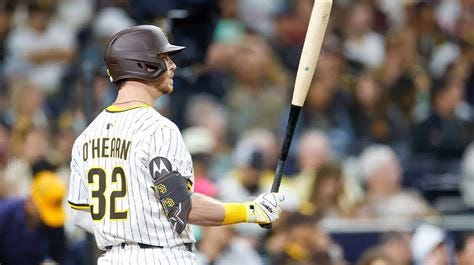
The question marks surrounding the 2026 Mets are pretty large. There are numerous holes to fill and even with Steve Cohen’s seemingly unlimited willingness to spend money, there really is only so much money for the team to throw around.
With so many areas where the team needs to upgrade, there is a need to find value in some of the needed areas, and one of the best bets David Stearns could make is at first base with finding a replacement for Pete Alonso. With the Mariners closing in on a five-year deal reportedly in the $90-100 million ballpark with first baseman Josh Naylor, the first major free agent domino is about to fall, and could help set the market for Alonso.
Something in the $25 million AAV is probably near the limit of what the Mets could spend, but even so they’d be looking at a short-term solution that would eat up a good chunk of the team’s budget. There are a ton of good reasons to re-sign Alonso to a similar contract to what he played 2025 under, but the Mets might be wiser to allow him to depart and turn their attentions – and dollars – elsewhere.
Consider these two free agent first basemen over the past three seasons (2023-25):
Player A: 9.3 rWAR, .244/.332/.496, 118 HR, .354 rOBA, 129 Rbat+, -6 Fielding Runs
Player B: 5.6 rWAR, .277/.343/.445, 46 HR, .344 rOBA, 124 Rbat+, -9 Fielding Runs
Player A is obviously Alonso, while Player B, as you might have guessed from the title of this article is Ryan O’Hearn, who put up those numbers mostly with the Baltimore Orioles and for 50 games this year with San Diego after the trade deadline.
Alonso has pretty clearly been the better player over the course of the past three seasons, helped in large part to his massive 2025 season. Here’s that comparison again, but this time using just cumulative stats from the 2023 and 2024 seasons:
Alonso: 5.8 rWAR, .229/.324/.480, 80 HR, .345 rOBA, 122 Rbat+, +3 Fielding Runs
O’Hearn: 3.2 rWAR, .275/.329/.450, 29 HR, .340 rOBA, 123 Rbat+, -9 Fielding Runs
Again, Alonso grades out as the better player, even when factoring in that he played in 62 more games that O’Hearn during that stretch. For one last comparison’s sake, here are Alonso and O’Hearn’s per-162 game averages over the past three seasons:
Alonso: 3.1 rWAR, 40 HR, -2 Fielding Runs
O’Hearn: 2.3 rWAR, 19 HR, -3 Fielding Runs
There really isn’t even much argument that Alonso is a better player both offensively and defensively (though neither player is a Gold Glove candidate) than O’Hearn unless one wants to take up the age-old batting average argument.
The central question for the Mets is not which player is better, but which player would be a better value for the team? Most projections have O’Hearn signing a two-year contract in the ballpark of $12-15 AAV, or about half of what Alonso is seeking.
Is the extra value Alonso brings from his additional home runs worth double the AAV? That is a much harder question to answer, especially once aging curves (O’Hearn is a year older than Alonso) enter the equation.
That question is only important because of the related question of if the Mets save $15 million a year on a first baseman, could that money be better allocated toward acquiring pitching help or on springing for an upgrade at another position of need that provides more value than the upgrade from O’Hearn to Alonso?
It really is not an easy question to answer, especially when you can probably count on what you’re getting from Alonso more so than O’Hearn based on their track records, but it may still be worth the gamble.
After all, the Mets faced a similar but different dilemma going into the 2000 season when John Olerud left for the Seattle Mariners and replaced him with Todd Zeile. That was a pretty clear downgrade, but were able to sign him to a contract that was about 13% less than Olerud’s. That helped the Mets add Mike Hampton and others and ultimately capture the NL pennant.
If circumstances make it necessary, O’Hearn might be the player that makes recreating that gambit successful in 2026.
Can I ask where you got the figures for fielding runs? When I look at Baseball Savant, O'Hearn's FRV as a first basemen for 2023-25 is +7 (+6 in 2025) while Alonso is -16 (-8 in 2025 alone). If O'Hearn is in fact a considerably stronger defender than Alonso at first base (he is weak in RF), then I think the argument for saving money by signing O'Hearn is that much more appealing.
If the Mets trade Mark Vientos, I'd be okay with O'Hearn on a one-year deal.
He had a real outlier season versus LHP in 2025, with an .832 OPS, versus a lifetime .642 mark against lefties. I fear he's really a platoon bat.